If you are planning to invest in Bali real estate or retire to the island full- or part-time, you’ve likely fallen in love with our emerald-green rice terraces, lush tropical microclimates, and vibrant coastal lifestyles.
But behind the scenes, nature is preparing a major shift.
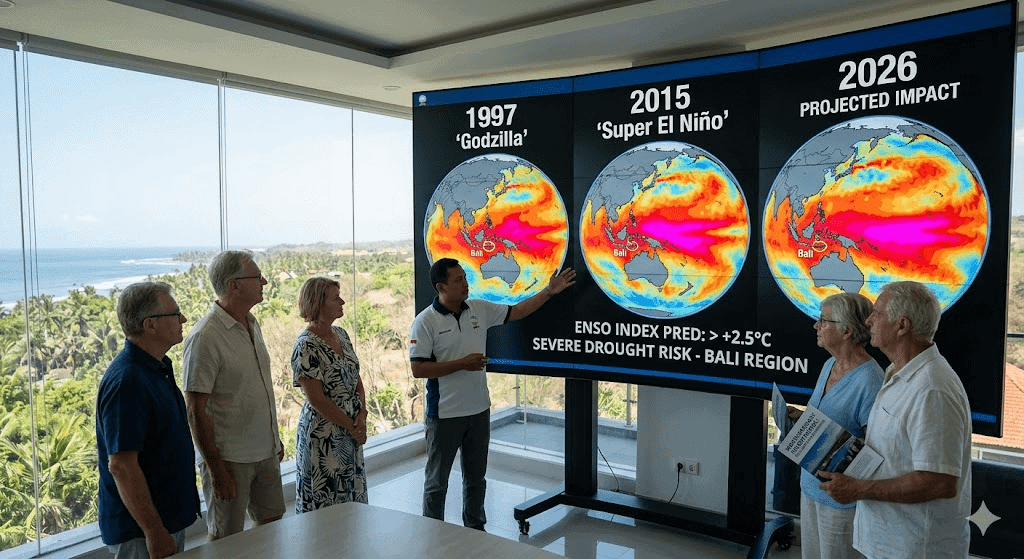
Global climate models, alongside Indonesia’s Meteorological Agency (BMKG), are tracking a significant climate phenomenon building for the second half of 2026: a powerful El Niño cycle. Climatologists are already comparing its potential footprint to the historic “Godzilla” cycles of 1997 and 2015.
For the average tourist, this just means fewer rainy days during their vacation. But for discerning real estate investors, luxury villa buyers, and retirees looking to call Bali home, this climate update is the ultimate playbook for making a secure, future-proof property investment.

Here is exactly how the upcoming 2026/2027 climate cycle will impact the island, and how you can use this information to choose a resilient property that protects both your lifestyle and your ROI.
1. The Weather Shift: More Sunshine, Shifting Monsoons
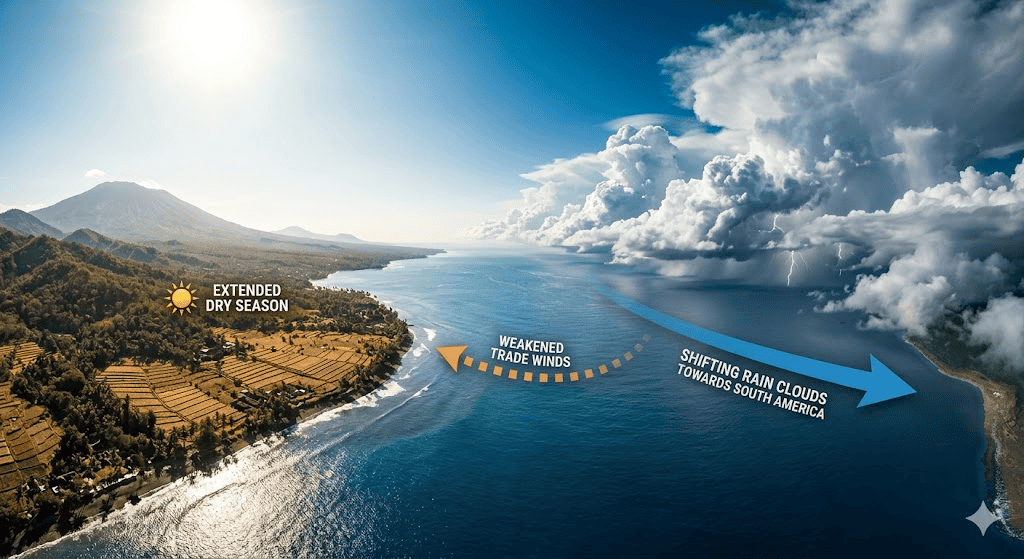
During a major El Niño, the typical trade winds weaken, pushing tropical rain clouds away from Indonesia toward South America.
What to expect:
- An Extended “Perfect Weather” Window: The dry season will arrive faster, burn hotter, and last longer. The traditional West Monsoon rains (typically starting in November) are projected to be significantly delayed, likely pushing true seasonal rainfall back into late January 2027.
- Microclimate Varieties: While the high-altitude volcanic center of the island (Bedugul, Kintamani) will retain its crisp, misty air, coastal zones will experience sustained hot, sunny days with almost zero humidity.
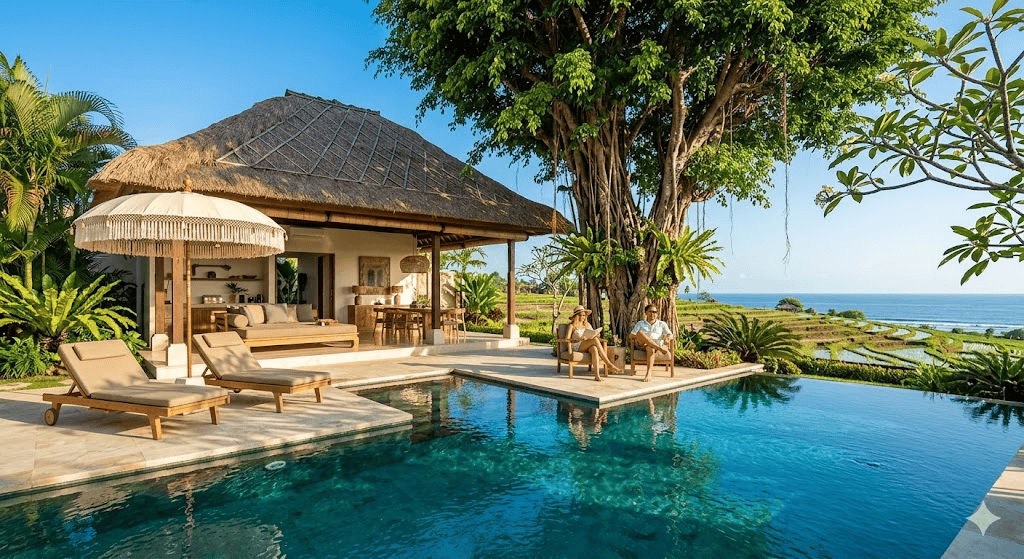
The Investor Angle: For part-time residents and holiday rental investors, an extended dry season means an elongated peak tourism window. Demand for premium villas with immaculate outdoor living spaces, shaded banyans, and deep swimming pools will skyrocket as travelers chase continuous sunshine.
3. Looking Ahead: The “La Niña Whiplash”
Savvy long-term residents know that tropical weather operates like a pendulum. Historically, a massive El Niño drought is followed 12 to 18 months later by a strong La Niña cycle, bringing hyper-saturated soils and sudden monsoon downpours.
Investing with a long-term lens means buying a property designed to handle both extremes. Ensure your villa features:
- Advanced Engineering & Drainage: Properly sloped retaining walls, oversized drainage channels, and reinforced foundations designed to easily divert heavy tropical downpours away from the living areas.
- Professional Roof Design: High-grade waterproofing, wide eaves to protect open-air living spaces, and premium gutter systems.
The Bottom Line: Paradise Favors the Prepared
A historic El Niño isn’t a reason to pause your Bali property search—in fact, quite the opposite. It provides a rare, transparent window to see exactly which locations, developers, and properties are engineered to the highest professional standards.
By focusing on premium real estate built with deep-water infrastructure, structural integrity, and smart climate engineering, you ensure that your time on the Island of the Gods is defined by absolute comfort, peace of mind, and secure financial returns—no matter which way the wind blows.
Looking for a climate-resilient luxury villa or retirement oasis in Bali? Our team specializes in vetting properties for top-tier infrastructure, legal compliance, and long-term asset security. Contact PT B.A.L.I. today to view our exclusive portfolio of future-proof properties.