RRI.CO.ID, Bangli – The Panglipuran Festival 2026 served not only as a tourism magnet, but also as an occasion to strengthen ties among Bali’s traditional villages. Through a gebogan competition that involved the villages network, this year’s festival successfully reaffirmed a collective commitment to preserving storied traditions amid modern pressures.
Under the theme Harmoni Bumi Panglipuran: Towards Inclusive, Sustainable, and Regenerative Tourism, the event held on Thursday, July 9, 2026, aims to reinforce Panglipuran Village in Bangli Regency as a model of community-based tourism management.
Bendesa Adat (customary village head) of Panglipuran, Wayan Budiarta, said the village’s tourism concept was not created solely to satisfy visitors. Tourism in Panglipuran stems from the community’s commitment to protect ancestral customs, culture, and the environment, guided by the Tri Hita Karana philosophy.
He said the community consistently preserves its traditional spatial layout, customary houses, bamboo forest, and awig-awig (customary law) as daily guides. Those values have become the village’s primary strength, drawing tourists without altering its identity.
Budiarta traced Panglipuran’s turning point to 1993, when the administration designated the village as a tourist site. From the outset, residents agreed that tourism must follow existing customary values rather than override them. That approach evolved into community-based tourism.
Since 2012, Panglipuran residents have ceased to be passive subjects of tourism and instead became active providers of homestays, cultural performances, and guiding services.
“Visitors come to experience real community life. Panglipuran is not merely a tourism object, but a living museum sustained by daily customs, rituals, and culture,” he said, as quoted by Antara.
That commitment has earned Panglipuran prestigious awards such as the Kalpataru and the Indonesia Sustainable Tourism Award. The village also ranked among the Top 100 Sustainable Destinations and was named one of the World’s Best Tourism Villages by UN Tourism in 2023.
Budiarta stressed that these accolades are not endpoints but motivations to maintain balance between cultural preservation, community welfare, and environmental stewardship.
For Panglipuran Festival 2026, organizers adopted the 4S concept, which are Something to Do, Something to See, Something to Buy, and Something to Learn. This framework is designed so visitors gain not only entertainment but also educational insight into Panglipuran’s culture and daily life.
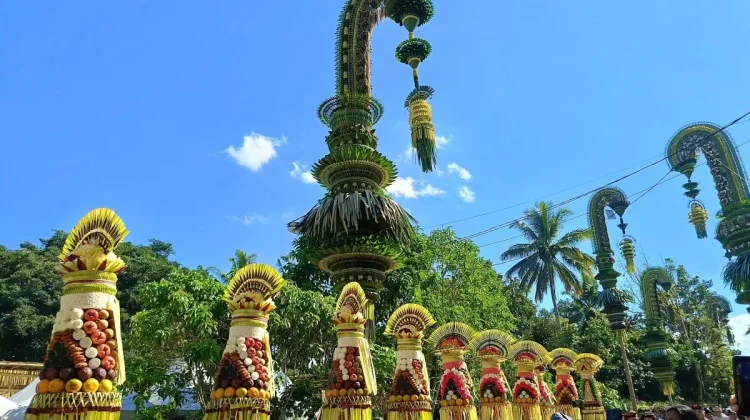
Festival highlights included cultural parades; art performances; traditional competitions; and Micro, Small, and Medium Enterprises (MSME) exhibitions. The gebogan competition, featuring villages from the Bebanuan network, reaffirmed historic ties among Bali’s customary communities.
Budiarta said the festival serves both as a tourism promotion platform and as a means to preserve arts, customs, culture, and the environment. The annual event also enhances tourism actors’ competencies and expresses community gratitude for blessings derived from managing the tourism village.
Through Panglipuran Festival 2026, Panglipuran Village aims to promote regenerative tourism. This approach goes beyond merely sustaining a destination to actively restoring the environment, strengthening local culture, and delivering tangible benefits to the community as the primary actors in tourism.
Meanwhile, the Penglipuran Village Festival 2026 achieved a major milestone by entering the Top 100 of the Karisma Event Nusantara (KEN) list compiled by the Ministry of Tourism. The community-based festival outperformed about 3,500 events nationwide thanks to its consistent cultural preservation and contribution to the local economy.