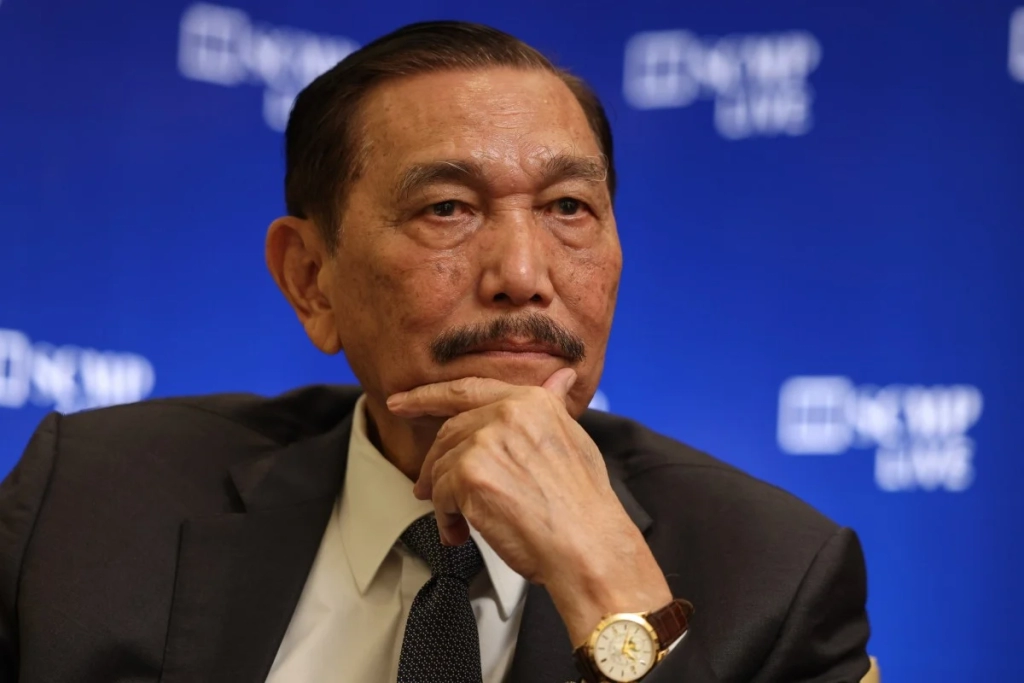
Luhut Pandjaitan wants investors to imagine kamikaze drones over Abu Dhabi, then picture themselves in Bali instead
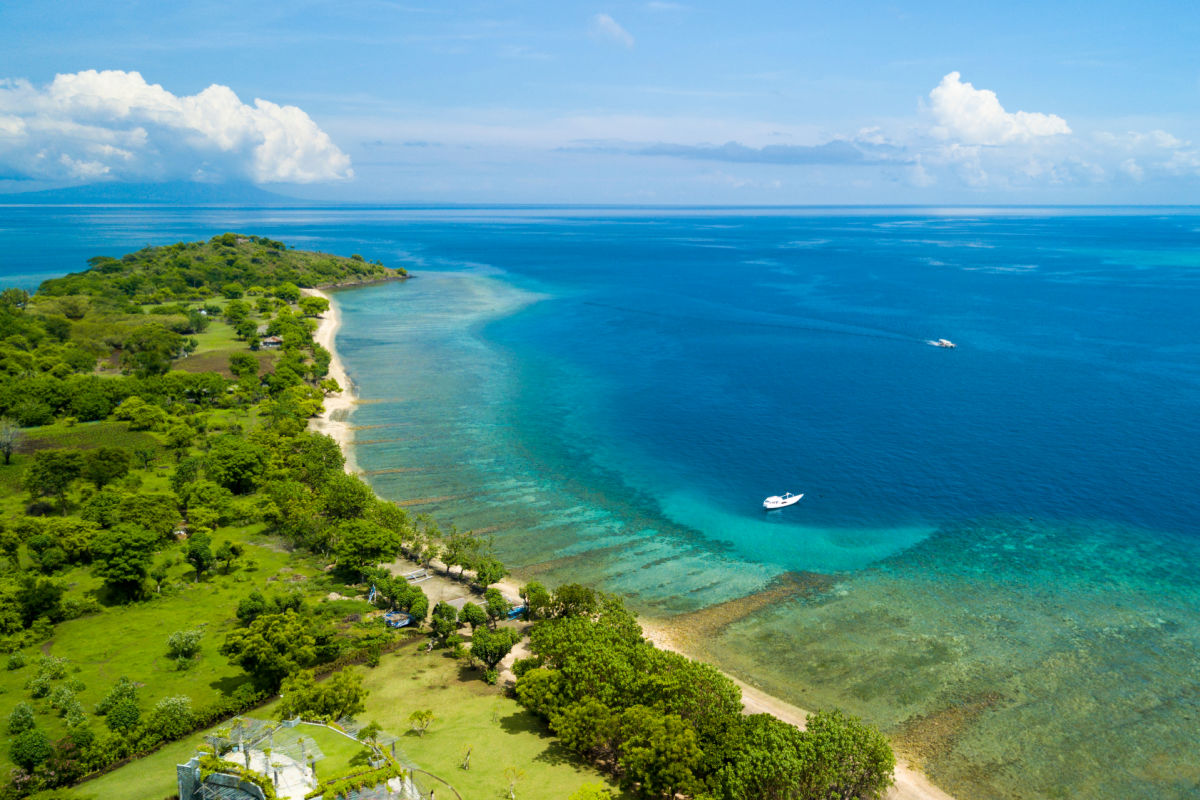
Bali has “aura” and political titan Luhut Pandjaitan wants to channel it to transform Indonesia’s famed resort island into an international financial centre.
But President Prabowo Subianto’s special adviser and economic tsar is not relying on subtle nods to Gen Z slang to sell paradise. Instead, he conjures up a striking image to make his case.
A friend recently sent him a photograph of kamikaze drones lighting up the skies over Abu Dhabi, accompanied by a plea: help us get out.
Indonesia, safely removed from the Iran war’s turmoil, was the obvious choice, he said.
“They said ‘We’d like to move our assets, we’d love very much to stay away from here and live in Bali, because it’s so peaceful in Bali’,” he recalled. “The Middle East conflict is not going to end next month or next year, I don’t believe that.”
Speaking to This Week in Asia on the sidelines of the Nusa Dua Forum in Bali on July 17, the 78-year-old chairman of Indonesia’s National Economic Council was a study in moustachioed calm – a far cry from the crisis of confidence that has roiled Southeast Asia’s largest economy this year.
For us … it’s a matter of survival
Investors, spooked by scepticism over Prabowo’s populist policies and rattled further by a global energy crisis that sent fuel prices soaring, have pulled billions out of Indonesia in recent months.
Acknowledging the market rout and concerns over money laundering, Luhut pledged greater transparency and to stamp out corruption.
“Without this, it’s very hard to gain trust and credibility,” he said, going on to describe the financial hub in existential terms. “For us … it’s a matter of survival.”
On Tuesday, Indonesia’s parliament passed legislation paving the way for the new financial centre just 20 days after talks on it had first begun.
Its precise location and the full range of associated incentives are still under wraps, but Luhut says the legislative speed should come as no surprise – he first floated the idea two years ago.
The centre could be up and running as soon as next month, he said, hinting that Prabowo might time an official announcement to coincide with the country’s independence day on August 17.
Instead of Indonesia’s civil code, the centre will operate under international commercial law, according to Luhut, who drew a parallel with Hong Kong.
“It’s like one country, two systems,” he said. “Which is not the ideal … But the purpose is to improve the credibility and trust of Indonesia.”
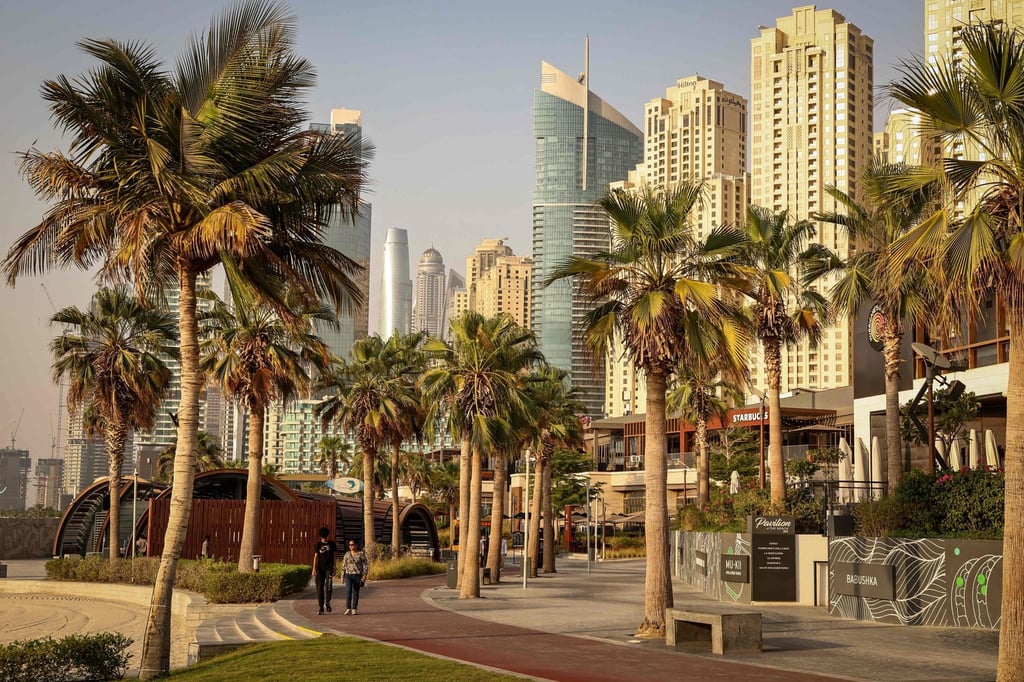
Sceptical of the notion that only Singapore, Hong Kong or the United Arab Emirates could host such hubs, Luhut said he had consulted a range of investors – from American hedge fund manager Ray Dalio to the Porsche family – and found them in agreement.
“They said they love the aura of Bali,” he quipped.
Separately, at the forum – co-organised by the South China Morning Post and Indonesian sovereign wealth fund Danantara – Indonesia’s former coordinating minister of maritime and investment repeated his pitch to a room filled with officials, investors and family office principals.
“We’re going to be very transparent. We’re going to be more efficient, there’s going to be less corruption,” he declared. “I’m pretty confident about that.”
Unshaken optimism
Luhut’s optimism does not end at the new international financial centre. He is convinced Indonesia’s digitalisation push and its young, skilled workforce can deliver Prabowo’s target of lifting economic growth from 5 to 8 per cent by 2029.
“I think 8 per cent – with digital infrastructure support, artificial intelligence and also with the family offices – I don’t think it’s a big deal,” he said, brushing off economists’ scepticism.
Technological progress over the past few years had been nothing short of “beautiful”, Luhut said, outlining how data collected from eight government ministries and major institutions now fed into an AI-supported system to drive efficiency gains.
“Indonesia will be different within two years,” he vowed, referring to a local “brain and talent factory” he founded where students are selected based on IQ scores and put through a curated curriculum.
Addressing the prevailing gloom surrounding coverage of Indonesia’s economy and policies, Luhut blamed a failure of messaging and argued that there was an information disconnect between the government and the public.
Earlier this year, global index provider MSCI warned it could downgrade Indonesia from emerging to frontier market status amid concerns over transparency and stock market manipulation. A May deadline it set to see signs of progress has since been pushed back to November.
A brighter spot came earlier this month, when S&P reaffirmed Jakarta’s sovereign credit rating, forecasting that recent financial strains would ease thanks to higher commodity prices and spending cuts.
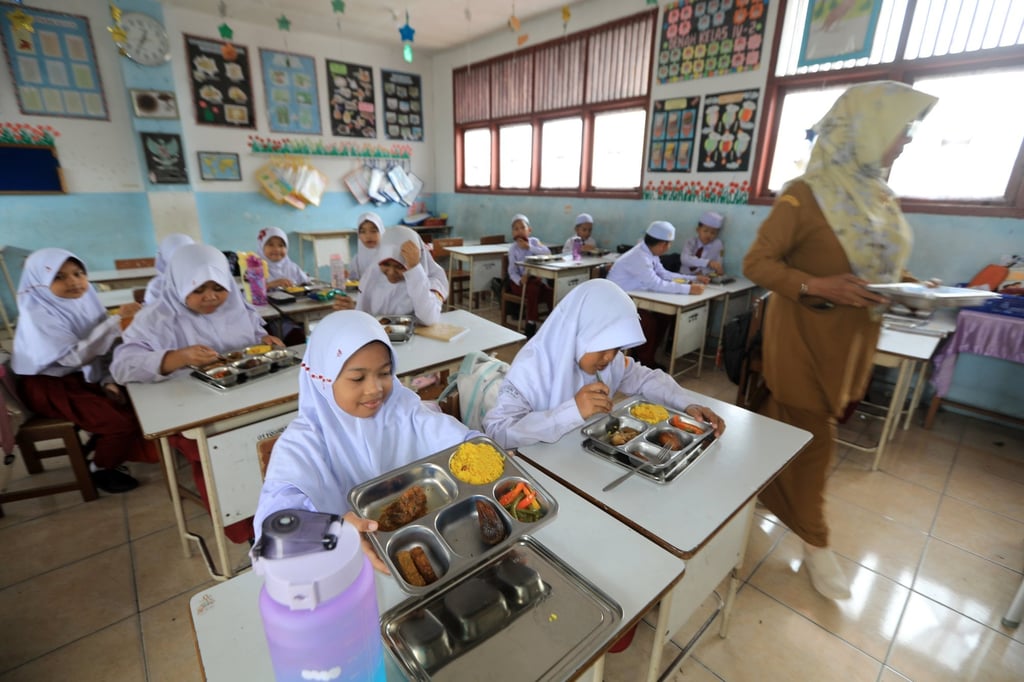
The government projects its budget shortfall to widen to 2.85 per cent of gross domestic product this year, just shy of the 3 per cent statutory ceiling. Prabowo’s flagship free meals programme – a cornerstone of his populist economic agenda – has drawn much of the flak for exacting a heavy toll on state finances since its launch in January 2025.
On Tuesday, the programme’s budget was slashed again – now reduced by more than 100 trillion rupiah (US$5.6 billion) from its original allocation – and the agency chief charged with overseeing it resigned a day later, citing health reasons.
Luhut defended the scheme as essential to inclusive growth and insisted the administration had committed to making it more “targeted” by focusing on remote areas.
“You have to adjust, because every province faces a different situation,” he said.
Indonesia’s troubleshooter
Luhut’s current role is just the latest chapter in a political and business career spanning four decades.
A former four-star army general, he first entered politics as Indonesia started its transition to democracy in the late 1990s, before stepping away several years later to build a business empire in energy, minerals and coal.
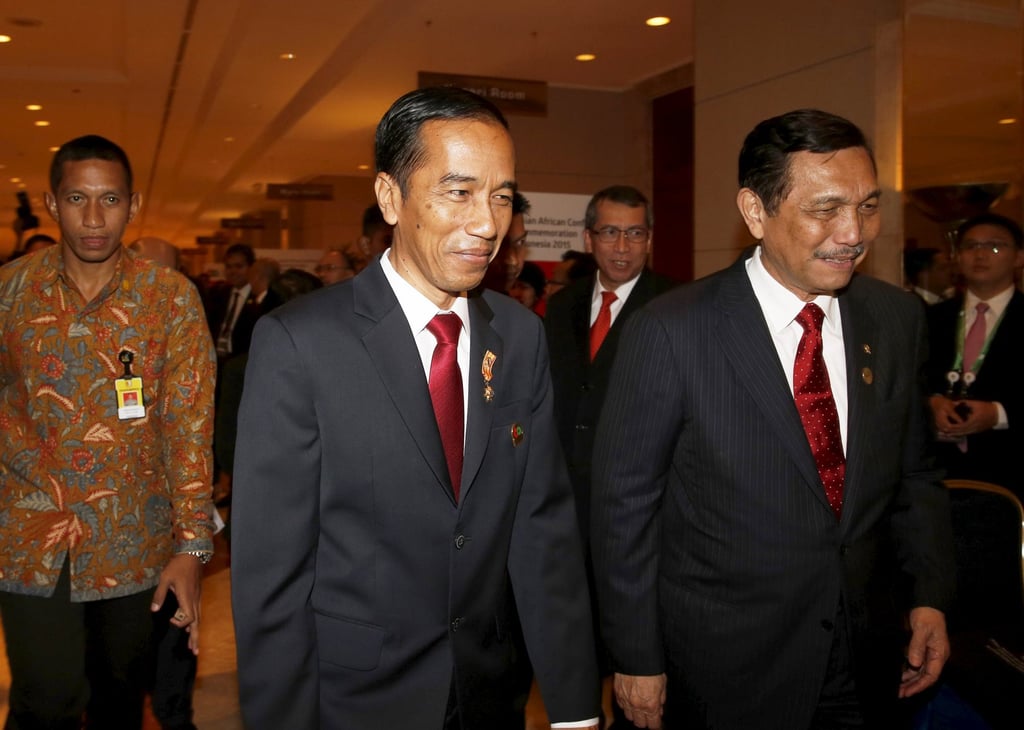
He returned in 2014 after helping finance Joko Widodo’s successful presidential campaign that year, becoming his chief of staff – a newly created position – and trusted troubleshooter, later spearheading both Indonesia’s downstreaming strategy and its pandemic response.
Also Widodo’s point man on China, Luhut called Jakarta-Beijing relations “very good”, revealing plans for an impending meeting between Prabowo and around 20 Chinese firms invested in Indonesia.
In May, Chinese businesses had raised concerns about Jakarta’s rising levies and stricter enforcement, with several Indonesian ministers pushing back, insisting the country must prioritise sovereignty over its natural resources.
To avoid misunderstandings, Luhut said Prabowo’s relationship with Chinese leader Xi Jinping had to become “much closer”.
“I said to the president, the biggest investor in this country is still China, whether you like it or not,” he said, noting that Beijing was “very willing” to share its technology and research capabilities.
Prabowo’s stricter demands of tycoons – including a plan to funnel proceeds from palm oil exports and other key resources through sovereign wealth fund Danantara to curb under-invoicing – has further unnerved investors, but Luhut shrugs off the unease.
“This country, with a 300 million population, it’s not easy to govern,” he said. “But we explain to them that the best time to invest in Indonesia is today.”
During the 2024 presidential election, when Luhut backed Prabowo’s campaign, he declined any ministerial post, opting instead to remain an adviser, according to state news agency Antara.
Asked about Widodo’s surprise return to the political stage this year – touring the country to support his son Kaesang Pangarep’s Solidarity Party – Luhut was philosophical,
“Jokowi is still active because, of course, he has to survive,” he said, referring to the former president by his popular nickname. “Otherwise, if you retire fully, it’s easy to get very old.”
Luhut described urging both presidents to maintain a harmonious relationship for the country’s sake, which Widodo did in 2019 when he made former electoral rival Prabowo his defence minister.
“He was my deputy, and now he’s my boss,” Luhut said of the current president. “If it’s just the two of us, we talk in a very relaxed way. But I still respect him, because this is an institution. And we have to respect that.”
For a man widely seen as one of Indonesia’s most influential unelected figures, Luhut professes being content with his position just beneath the summit of power.
“I’m happy with what I am. That’s my destiny,” he said. “Everything under this sky, whatever it is, I try to contribute as much as I can because I love this country.”
Fittingly, he closed his pitch to investors at the Nusa Dua summit not with numbers, but a feeling. “You’ll never get bored in Bali,” Luhut said. “Whenever I land in Bali I can feel friendliness, harmony and hope.”