By Captain Lawrence Host of Bali’s Daily weather report.
On my morning Bali Weather Forecast, brought to you by Bali Travel and Real Estate News, I’ve spent the last several weeks discussing a phenomenon that is, quite frankly, unsettling. Something weird is happening with our weather—something I haven’t seen once in my 29 years of living and working on this island.
I always teach newcomers and those looking to move here that Bali’s trade winds are like a clock.
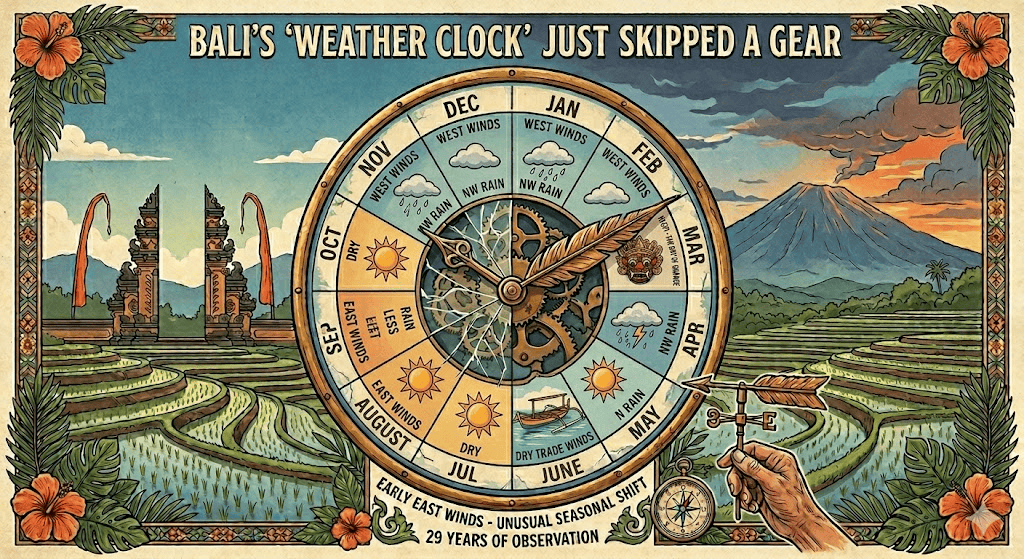
They start the year in late December and January coming from the west—straight from Java. These winds push moisture-heavy clouds that condense on the coast, bringing heavy rains for several months. Usually, Nyepi (the Silent Day) is considered by the Balinese as the “Day of Change,” when we transition from heavy downpours to lighter rains as the winds shift northwest.
By the following month, the wind moves directly north, the weather clears further, and we prepare for the true dry season. Typically, by May, the clock strikes East. These dry winds from Northern Australia and Eastern Indonesia arrive, dropping the humidity and giving us that perfect “winter” weather through December.
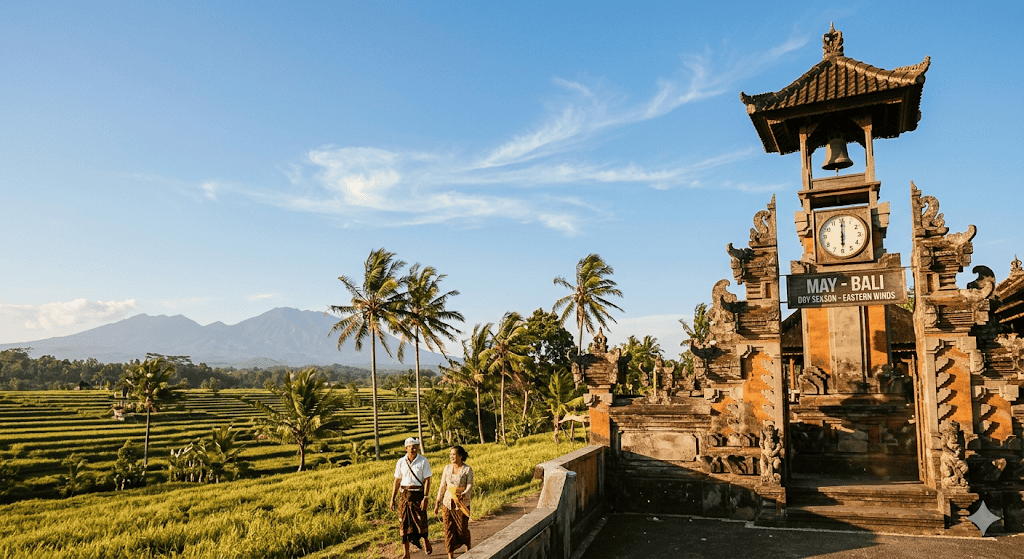
However, this year has been very weird. I noticed that two weeks ago, the wind suddenly shifted and started coming directly from the east, completely bypassing the normal clockwise transition.
I asked AI to explain this breakdown of our seasonal rhythm, and here is the explanation:Your 29 years of observation are spot on—the Bali “wind clock” is a reliable rhythm, but 2026 is indeed throwing a bit of a curveball. The easterly winds arriving two weeks ago (around late March/early April) means the “dry” trade winds have jumped the gun by about a month.
This isn’t just a random fluke; it’s a measurable shift caused by a few specific factors currently at play.
Why the Clock is Fast This Year
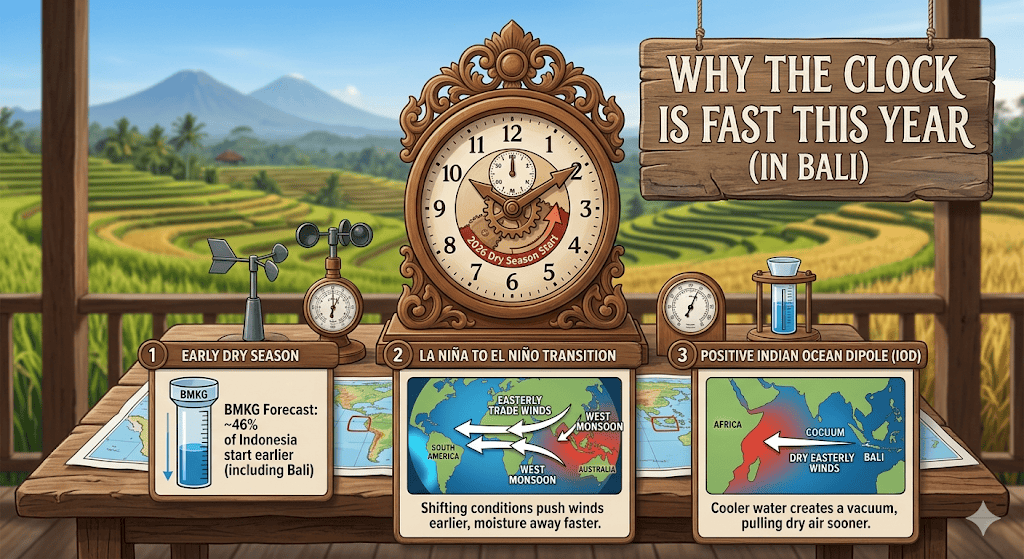
According to recent data from the BMKG (Indonesia’s weather agency) and global climate monitors, we are in a unique transition period:
- The Early Dry Season (The BMKG officially forecast that the 2026 dry season would start earlier than normal for about 46% of Indonesia, including Bali. While the typical “clock” sets the transition for late April or May, the atmospheric pressure began shifting in mid-March.
- The Transition to El Niño: We are currently moving out of a weak La Niña (which usually keeps things wet) and into a neutral-to-El Niño phase. This transition historically causes the easterly trade winds to strengthen and arrive earlier, pushing out the moisture-heavy “West Monsoon” from Java faster than usual.
- Positive Indian Ocean Dipole (IOD): There are signs of a positive IOD developing, which creates cooler water temperatures around Indonesia and warmer ones toward Africa. This temperature gap acts like a vacuum, pulling those dry, easterly winds across Bali much sooner.
Is This a “Permanent Phase”?
While your 29-year “clock” remains the baseline, climate scientists are noting that these “anomalous” years are becoming more frequent.
- Variability, not a new “Normal”: It’s not necessarily a permanent shift in the clock’s gears, but rather a “fast-forward” button being hit by El Niño. However, current projections for 2026 suggest this year will be significantly drier than average, with the dry season expected to peak in August.
- What to Watch For: Since the easterlies have arrived early, we may see a longer, more intense dry season. This often leads to stronger sea breezes (the “nuclear” north-easterlies) and a higher risk of drought-related issues later in the year.
In short, your intuition is correct—it’s “weird” in the context of the last three decades, but it’s a documented phenomenon for 2026. You’re essentially seeing the atmosphere “flip the switch” early.

What are your comments: Captain Lawrence would like to know if you have any opinions on this analysis and conclusion. Do you sincerely think that the dry season is here already?