
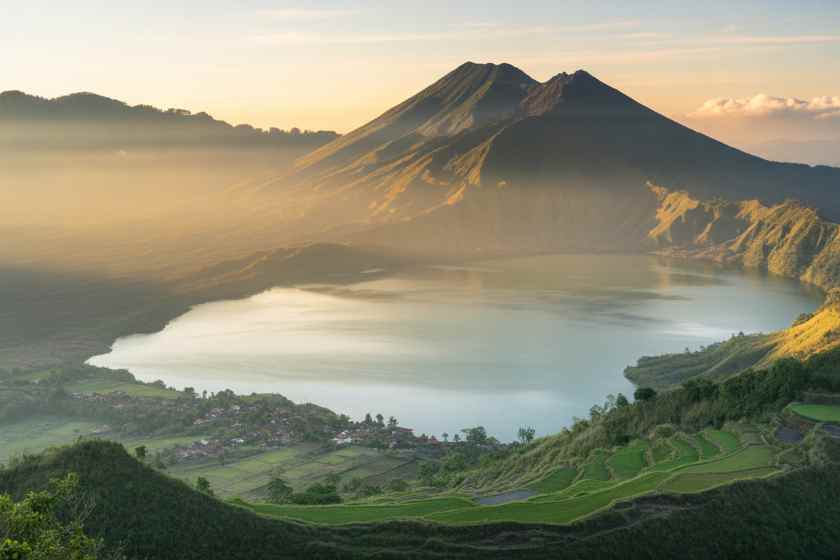
As one of Bali’s fastest-growing tourism hotspots, Kintamani has seen a surge in visitors, and recently, this beautiful region has garnered attention for its new visitor fees. Kintamani, once merely a coffee stop for those heading to Mount Batur, is now a prominent destination offering breathtaking views of the volcano, incredible coffee roasters, and much more. However, a recent wave of social media posts showing long queues of tourist cars at the entrance to the Kintamani Special Tourism Area (KSPK) on Jalan Raya Penelokan has sparked curiosity and confusion regarding new entrance fees.
Located in the heart of Bali’s mountainous region, Kintamani is home to some of the island’s most famous attractions, including the dramatic views of Mount Batur. The area is also renowned for its coffee plantations, providing visitors with a chance to sample some of the finest Bali coffee, all while enjoying the cool mountain air. Yet, as the number of visitors continues to rise, so too does the need to regulate and manage the increasing flow of tourists.
Kintamani’s Tourism Surge and the Entrance Fee Confusion
In recent days, footage of long lines of cars waiting to enter the Kintamani Special Tourism Area has flooded social media, sparking confusion and concern among visitors. The queues were mainly at the entrance along Jalan Raya Penelokan, the central street that runs through Kintamani, known for its spectacular views and its unique coffee roasters. Tourists, eager to explore the area and enjoy the famous Mount Batur vistas, were left wondering whether these queues were a result of the newly introduced visitor fees.
Kintamani has been growing rapidly in popularity due to its impressive natural landscapes, outdoor activities, and cultural experiences. The area’s appeal is undeniable, offering both adventure travelers and those seeking relaxation the chance to enjoy Bali’s natural beauty away from the more tourist-heavy areas like Ubud or Kuta. The picturesque villages, active volcanoes, and coffee plantations have attracted a steady stream of both domestic and international tourists.
To manage the increase in visitors and preserve the area’s delicate environment, Bali authorities introduced an entrance fee for Kintamani. While the move has been welcomed by some as a way to support sustainable tourism, it has also raised questions among travelers about how the fees will affect their plans.
Clarification of Kintamani Visitor Fees: What Tourists Need to Know
In response to the confusion, the Kintamani Tourism Office has provided clarification regarding the newly imposed visitor fees. According to the office, the fee applies specifically to the Kintamani Special Tourism Area (KSPK), an officially designated zone that includes the main viewpoints of Mount Batur and the surrounding scenic areas. This fee is aimed at regulating access to the area while ensuring the sustainability of the region’s tourism infrastructure.
For visitors arriving by car, the entrance fee will be charged per vehicle. The amount is set to contribute to the maintenance of the Kintamani area, including the preservation of its natural sites and the improvement of local infrastructure, such as roadways and facilities for tourists. The fees are part of a broader effort to manage the environmental impact of the growing number of visitors flocking to Bali’s highland regions.
For those concerned about long wait times or the queues observed at the entrance, the tourism office reassures that these are temporary growing pains associated with the implementation of the new system. Authorities are currently working on streamlining the entry process, especially during peak tourist seasons like the current period leading up to Easter.
What’s Included in the Visitor Fee for Kintamani?
The entrance fee for Kintamani grants access to the Kintamani Special Tourism Area, which covers some of the best-known viewpoints and natural attractions in the region. Travelers will find incredible spots to enjoy panoramic views of Mount Batur, explore the nearby Lake Batur, and visit the numerous coffee plantations that are integral to Bali’s rich agricultural heritage.
Alongside these natural wonders, tourists can engage in outdoor activities such as hiking, trekking, and even mountaineering. Visitors also have the chance to learn about the unique culture of the Kintamani region, with opportunities to explore local villages, visit Hindu temples, and interact with indigenous communities.
The fee, which is collected upon entry, is designed to support these experiences and ensure that Kintamani continues to offer memorable, sustainable tourism experiences for years to come. For visitors wanting to fully immerse themselves in the culture and beauty of the area, the fee ensures that the region can continue to provide high-quality, authentic experiences.
Impact on Bali’s Tourism Industry
As Kintamani’s popularity continues to rise, the introduction of visitor fees highlights the balancing act that many tourist destinations must manage between tourism growth and environmental preservation. Bali, as a whole, has been heavily reliant on tourism as a key pillar of its economy, but there has been increasing pressure to manage the influx of visitors in a way that doesn’t compromise the island’s natural beauty and cultural integrity.
Kintamani, with its striking landscapes and growing tourism appeal, is at the forefront of this effort. The introduction of fees for entry to Kintamani’s most popular spots is just one of several measures being considered across the island to address issues like overcrowding, environmental degradation, and infrastructure challenges.
The new fees also reflect a wider trend in Bali and other popular tourist destinations around the world, where destination management strategies are being developed to ensure that tourism is both sustainable and beneficial for local communities. These measures may include managing visitor numbers, improving tourism services, and directing funds to preservation projects and environmental conservation.
Looking Ahead: Sustainable Tourism for Bali
For travelers planning to visit Kintamani, it’s important to be prepared for the changes in the visitor experience that the new entrance fees may bring. While the fees will contribute to the preservation and development of Bali’s mountain regions, they are also aimed at ensuring that the island’s natural and cultural heritage is protected for future generations.
As Bali continues to be one of the most sought-after travel destinations in Southeast Asia, managing tourism responsibly will be key to ensuring that it remains an attractive and sustainable destination for years to come. With the clarification of visitor fees in Kintamani and the ongoing efforts to streamline access, travelers can look forward to experiencing the island’s extraordinary beauty and culture in an increasingly responsible and well-managed way.
Conclusion: A New Chapter for Kintamani and Bali’s Tourism
The introduction of visitor fees in Kintamani marks an important step towards more sustainable tourism management in Bali’s rapidly growing tourism sector. While the recent queues at the Kintamani Special Tourism Area have sparked questions, the clarification from the tourism office provides tourists with the information they need to enjoy their visit without surprises. As Bali continues to evolve as a global travel destination, it’s clear that the island is committed to balancing growth with environmental and cultural preservation.