
We asked a Balinese culture expert about Galungan & Kuningan – here’s all you need to know about this spiritual Balinese tradition.
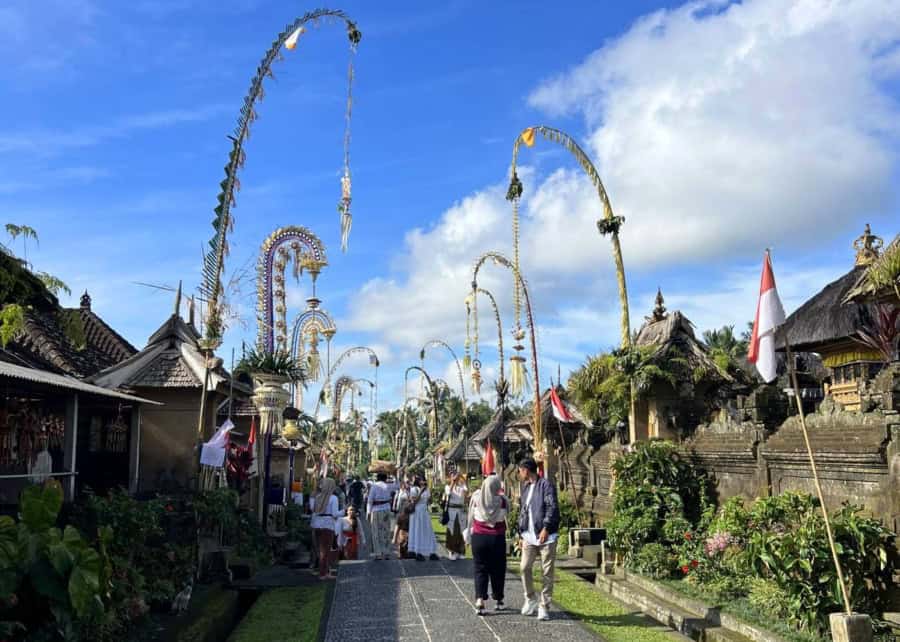
If you’ve noticed the streets of Bali lined with beautiful bamboo poles (penjor) lately, you’re witnessing Bali’s most important celebrations: Galungan and Kuningan. These religious holidays happen twice a year (thanks to the 210-day Balinese calendar), and is a time when families honour the spirits of ancestors past, and celebrate the triumph of good over evil.
Tourists often compare this cultural Balinese celebration to Christmas, even dubbing it the “Balinese Christmas”. But a more fitting comparison would be American Thanksgiving, or Mexico’s Día de los Muertos (Day of the Dead). The celebration of Galungan welcomes spirits back to earth for 10 days, while the Kuningan celebration marks their departure back to their spiritual realm.
Key details on Galungan and Kuningan
What: A Balinese spiritual celebration dedicated to ancestral spirits.
Where: Everywhere in Bali.
Dates: Galungan on 17 June 2026, and Kuningan on 27 June 2026.
Duration: 10 days.
Note: 2026 is one of the rare calendar years with only one Galungan (instead of two), making it a particularly special year to visit.
All you need to know about Galungan in Bali

What is Galungan?
Galungan is one of the most important religious festivals in Bali, symbolising the victory of Dharma (good) over Adharma (evil). For the Balinese, it’s a time when their ancestors’ spirits return to earth, and families come together to honour these spirits through canang sari offerings and prayers. More than just a celebration, Galungan also represents the eternal battle between good and evil, reminding the Balinese to stay true to their spiritual path.
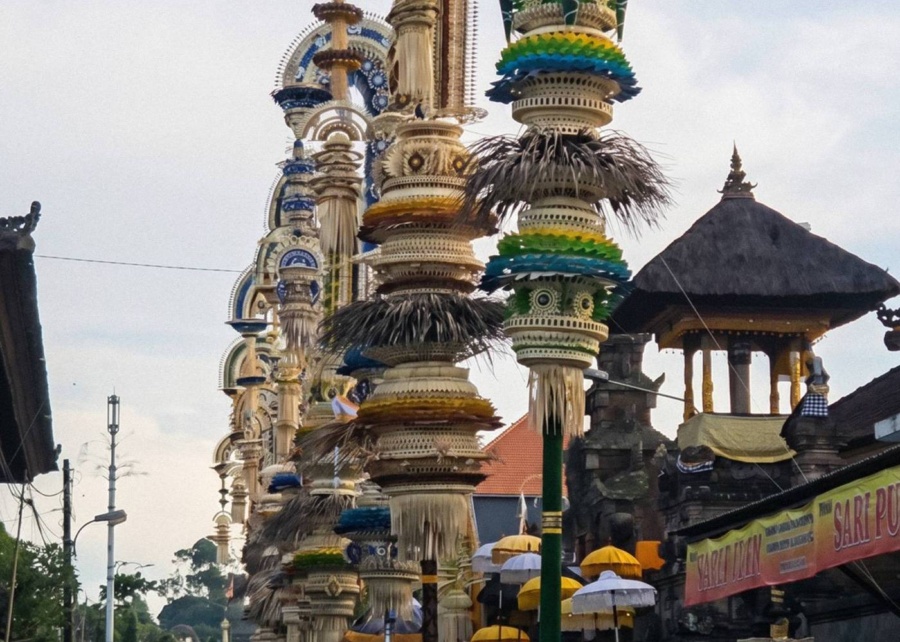
The festival is marked by colourful rituals, family reunions, and the iconic penjor (bamboo poles) that line the streets, symbolising nature’s bounty and the protection of the Gods. For the Balinese, Galungan is a deeply meaningful time of reflection, gratitude, and spiritual connection.
The history of Galungan in Bali
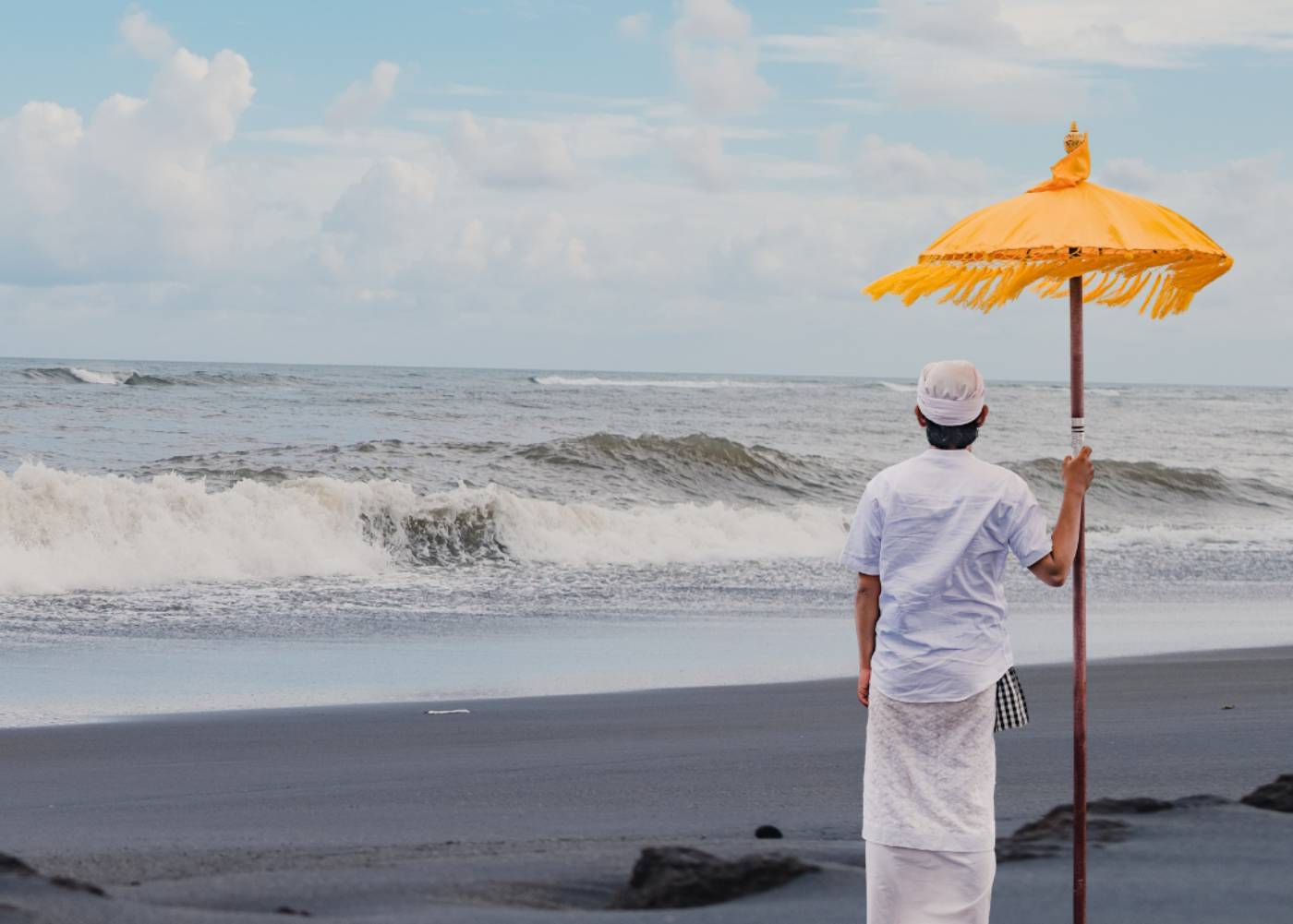
Galungan is all about victory. The name itself comes from Old Javanese, meaning “battle”, and it’s celebrated as the triumph of Dharma (virtue) over Adharma (vice). It is said that on this day the gods appear as Sang Kala Tiga, three ferocious entities: Sang Bhuta Galungan (The Great Demon of the Battle Day), Sang Bhuta Dungulan (The Great Demon of the Victorious Day), and Sang Bhuta Amengkurat (The Great Demon of the Earth Bearer).
But the story doesn’t stop there. After a dramatic chase and series of transformations (including Mayadenawa disguising himself as everything from a chicken to a rock), Lord Indra eventually defeated the trickster. His victory is remembered every Galungan, and Bali’s famous Tirta Empul water temple, known for its holy spring, is said to have been created by Lord Indra during this battle.
When is Galungan day in Bali?
Thanks to Bali’s unique 210-day calendar, Galungan comes around twice a year. The holiday marks the start of a 10-day celebration, beginning with Galungan and ending with Kuningan. Families across Bali prepare for the arrival of their ancestors, who are believed to visit during this time and remain until they depart on Kuningan day.
In 2026, Galungan lands on Wednesday 17th June. The celebration lasts for 10 days, concluding with Kuningan which lands on Saturday 27th June.
How is Galungan celebrated in Bali?
Here’s a timeline of Galungan celebration in Bali:
- Day before Galungan: Families gather to cook, prepare offerings, and ready their home temples which serve as the ancestors’ temporary homes for the next 10 days.
- Galungan day: The ancestors arrive. Locals pray at their home temples and village shrines. Expect temple ceremonies, local Balinese dressed in ceremonial attire, and a quieter, more spiritual atmosphere across the island.
- In-between days 2 to 9: Life continues with a spiritual undercurrent. Penjor poles remain up, offerings are made daily, and temple visits carry on. Village streets feel festive and alive.
- Kuningan day: The ancestors depart. Balinese families offer yellow rice (nasi kuning) as a final gesture of thanks — “kuning” means yellow in Bahasa Indonesia.
Tips for visitors during Galungan and Kuningan celebrations
- Dress respectfully when visiting temples (as always!).
- Ask before photographing or recording a ritual. It’s a kind gesture that locals will appreciate as they observe these sacred ceremonies.
- Step around the canang sari offerings on the streets across Bali.
- Explore the penjor-lined streets. Best time: early morning to avoid crowds and vehicles.
- Slow down, observe “real Bali” with curiosity, and remember you’re witnessing a centuries-old celebration!
Galungan and Kuningan are much more than just another holiday on the Balinese calendar. They are a time to reflect on the victory of good over evil, to express gratitude for life’s blessings, and to honour both living and departed family members.
Selamat hari raya Galungan dan Kuningan!
Source: The Honeycombers